Page Not Found
Page not found. Your pixels are in another canvas.
A list of all the posts and pages found on the site. For you robots out there is an XML version available for digesting as well.
Page not found. Your pixels are in another canvas.
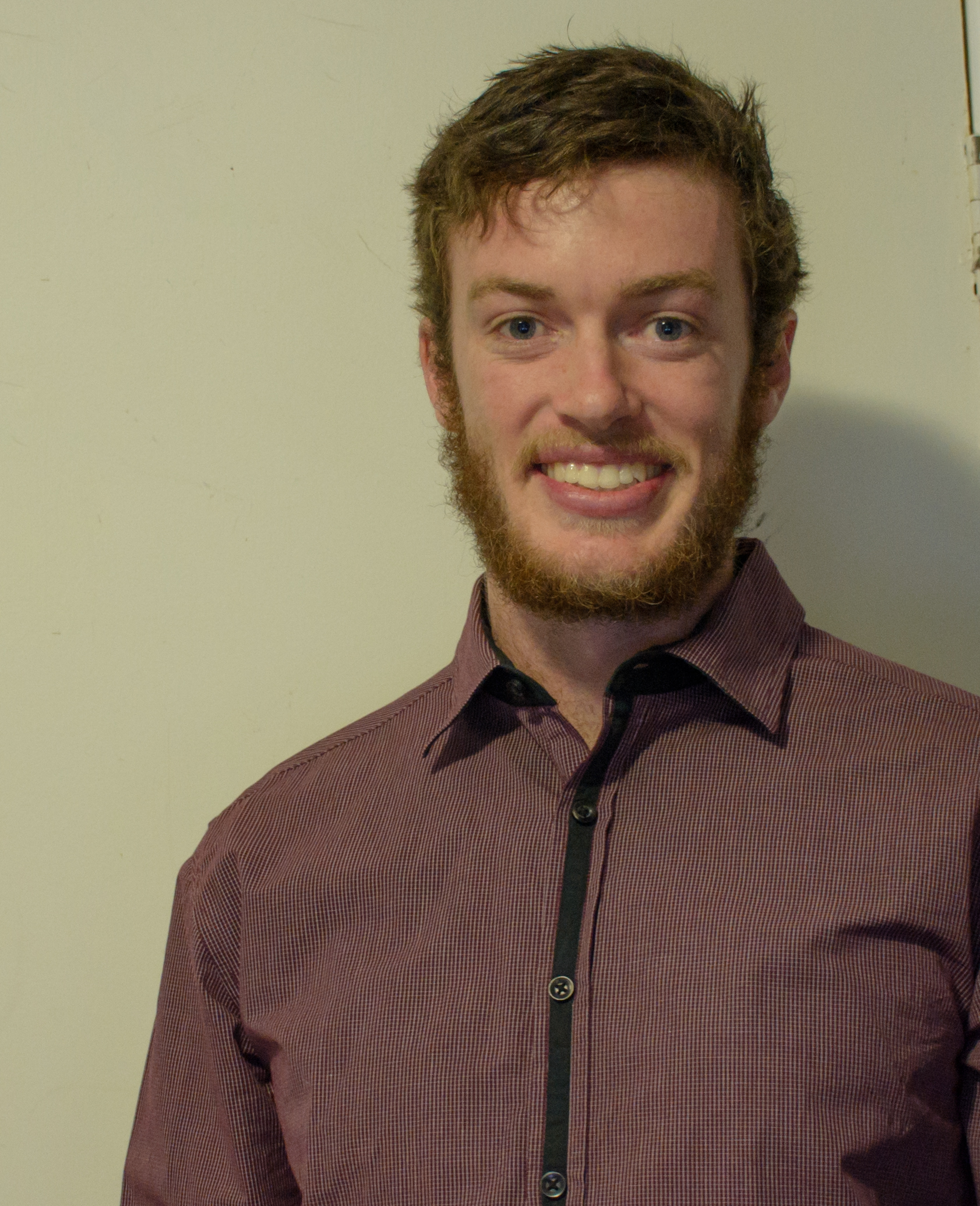
About me
In 2025 I began building Irupe Crochet, a handmade crochet store created together with a friend.
We wanted a simple, elegant way to showcase and sell her handmade crochet pieces online.
The live site is irupecrochet.com.
During lockdown in 2021 I decided to try and learn some web development, something that I’ve always wanted to do. I chose to develop a simple budgeting calculator, something that I hope to get some use out of, even if no one else does! The website is live at abudgetcalculator.com.
I developed an automated regime for calibrating a multi-camera system with a UR5 robotic arm, in collaboration with a fellow student. The software is written in Python in a Ubuntu environment and also makes use of the Robotic Operation System (ROS). The package has been used successfully by members of the Australian Centre for Robotic Vision.
I spent a year working as a Research Assistant with the Australian Centre for Robotic Vision at the Australian National University. During this time my main project involved the development of a prototype robotic harvester for green asparagus. My role involved developing a vision system that would enable the robotic to detect and localise asparagus spears that were ready for harvest.
I was part of the team for the Australian National University’s (ANU) first entry in the World Solar Car Challenge. Our team successfully completed the race and achieved a top 20 result in a competitive field.
My undergraduate thesis explored the possibilities of utilising the Lytro light-field camera for video applications. I developed a software package that remotely triggered the Lytro while simultaneously moving a robotic arm that was holding the camera. This software allows for the capture of light-field datasets where the position and orientation of the camera is known for each frame.
I spent a Summer working within the Scientific Computing section of the Information Management and Technology unit at CSIRO in Canberra. In this role I developed an automated test suite for the hardware and software of the CSIRO’s high performance computers.
Published in Undergraduate thesis, 2017
Published in IEEE International Conference on Robotics and Automation (ICRA), 2018
Published in arXiv, 2018
Published in 6th IFAC Conference on Sensing, Control and Automation Technologies for Agriculture, 2019
Published in arXiv, 2021
Published in Postgraduate thesis, 2021
Published in IEEE International Conference on Intelligent Robots and Systems (IROS), 2021
The light field is the full description of light as it travels in all directions through space around us. It can be thought of as being made up of infinitely many light ray vectors, each with a direction of propagation and a magnitude that is proportional to their intensity. In this post I provide an introduction to the lightfield and lightfield photography.
To try to learn a bit more about what goes on under the hood when I’m writing code I wrote a memory allocation and freeing module in C. C requires memory management and has it’s own functions to help with this, eg. malloc(), realloc(), calloc(), free(). To try to understand a bit more about how these worked, I decided to write my own versions of malloc() and free().
I spent a Summer working within the Scientific Computing section of the Information Management and Technology unit at CSIRO in Canberra. In this role I developed an automated test suite for the hardware and software of the CSIRO’s high performance computers.
My undergraduate thesis explored the possibilities of utilising the Lytro light-field camera for video applications. I developed a software package that remotely triggered the Lytro while simultaneously moving a robotic arm that was holding the camera. This software allows for the capture of light-field datasets where the position and orientation of the camera is known for each frame.
I was part of the team for the Australian National University’s (ANU) first entry in the World Solar Car Challenge. Our team successfully completed the race and achieved a top 20 result in a competitive field.
I spent a year working as a Research Assistant with the Australian Centre for Robotic Vision at the Australian National University. During this time my main project involved the development of a prototype robotic harvester for green asparagus. My role involved developing a vision system that would enable the robotic to detect and localise asparagus spears that were ready for harvest.
I developed an automated regime for calibrating a multi-camera system with a UR5 robotic arm, in collaboration with a fellow student. The software is written in Python in a Ubuntu environment and also makes use of the Robotic Operation System (ROS). The package has been used successfully by members of the Australian Centre for Robotic Vision.
During lockdown in 2021 I decided to try and learn some web development, something that I’ve always wanted to do. I chose to develop a simple budgeting calculator, something that I hope to get some use out of, even if no one else does! The website is live at abudgetcalculator.com.
In 2025 I began building Irupe Crochet, a handmade crochet store created together with a friend.
We wanted a simple, elegant way to showcase and sell her handmade crochet pieces online.
The live site is irupecrochet.com.
Published in Undergraduate thesis, 2017
Published in IEEE International Conference on Robotics and Automation (ICRA), 2018
Published in arXiv, 2018
Published in 6th IFAC Conference on Sensing, Control and Automation Technologies for Agriculture, 2019
Published in arXiv, 2021
Published in Postgraduate thesis, 2021
Published in IEEE International Conference on Intelligent Robots and Systems (IROS), 2021
The light field is the full description of light as it travels in all directions through space around us. It can be thought of as being made up of infinitely many light ray vectors, each with a direction of propagation and a magnitude that is proportional to their intensity. In this post I provide an introduction to the lightfield and lightfield photography.
To try to learn a bit more about what goes on under the hood when I’m writing code I wrote a memory allocation and freeing module in C. C requires memory management and has it’s own functions to help with this, eg. malloc(), realloc(), calloc(), free(). To try to understand a bit more about how these worked, I decided to write my own versions of malloc() and free().